Who is the fifth grader?
For the past ten years, you have been raising, loving, and nurturing your youth through their childhood. While parenting is a constant learning curve, odds are you have come to know what to generally expect in your youth’s behavior and emotions throughout their gradual development.
Then one day, suddenly how you are parenting doesn’t seem to be working anymore. Suddenly, you can no longer predict or know what to expect from your youth in their behavior OR emotions. You may notice they are beginning to desire more independence and privacy. Their priorities are changing in unexpected ways, and their decisions and changes in personality are causing you not to recognize the child you feel you’ve know all their life. They are rejecting that parenting bond you’ve so carefully been building since they emerged into this world, and suddenly you are starting from square one all over again. What is going on?
World, meet the fifth grader.
I want to preface this with a few things.
All fifth graders are at a very different point in their development. However, even if your fifth grader hasn’t shown any beginning signs of puberty, I can promise you that they are noticing it in their peers, and that can totally have an impact on their behavior and emotions.
Much of this article is going to be about female fifth graders, as male fifth graders won’t hit puberty for about another two years. I invite you to continue reading anyway, because odds are you will find at least one thing you resonate with. Besides, your youth may have questions about the body changes they are noticing in the peers in their class!
The picture I am going to paint for you is one of a fifth grader who has, so far, had all of their basic needs met. They are safe, have a somewhat predictable structure at home, and have a sense of security in the trusted adults in their life. They have experienced a sense of belonging, self-awareness, and self-worth. The catch here is that there are MANY youth struggling to get their basic needs met. If any of this doesn’t sound like your youth, then it is likely there are other things going on that are worth noticing and require extra support, both for you and your youth (and asking for help is perfectly normal!).
The fifth grader is 10-11 years old. Girls enter puberty nowadays anywhere between the ages of 8 and 12 years old. Yep, that’s probably very different from when you were a preteen! We’re seeing that youth are beginning to start puberty earlier and earlier. Because of this, it’s extremely likely that the fifth grader is either beginning to experience puberty themselves or they are noticing it in their peers. This is the beginning of quite the journey - puberty begins to soar at this age, but it doesn’t end until their brain is fully developed. For females, this is usually at ages 24-25, and in males it’s around age 27. Crazy, right?
Physically, you may notice the beginning of breast bud development, coarser body hair, growth spurts, acne, gaining weight, and even menstruation. However, it is likely that the external physical changes are not the cause of the sudden turbulence and tension rising in your home. One of the most essential parts of puberty for youth is their transition from childhood into adulthood. And fifth graders are notorious for having one foot in each bucket.
One minute they are locking themselves in their room and the next they are snuggled up next to you on the couch. One minute they are watching cartoons and the next they are trying on makeup. One minute they are ______ and the next they are _______. Fill in the blank with any two contrasting behaviors, and you could create your own (perfectly normal) image of the fifth grader.
The thing is, their whole life their family has been their circle. This is the place they have learned their values from, explored their interests, found connection and belonging, etc. This all changes when a youth begins to hit puberty, and we often see it starting in fifth grade. The fifth grader will begin to disconnect from their parents and search for connection elsewhere as a crucial step in transitioning from childhood and adulthood. There is a constant push-and-pull happening at home, where they seek out connection and then completely reject it when you offer it outright. How does that make any sense?
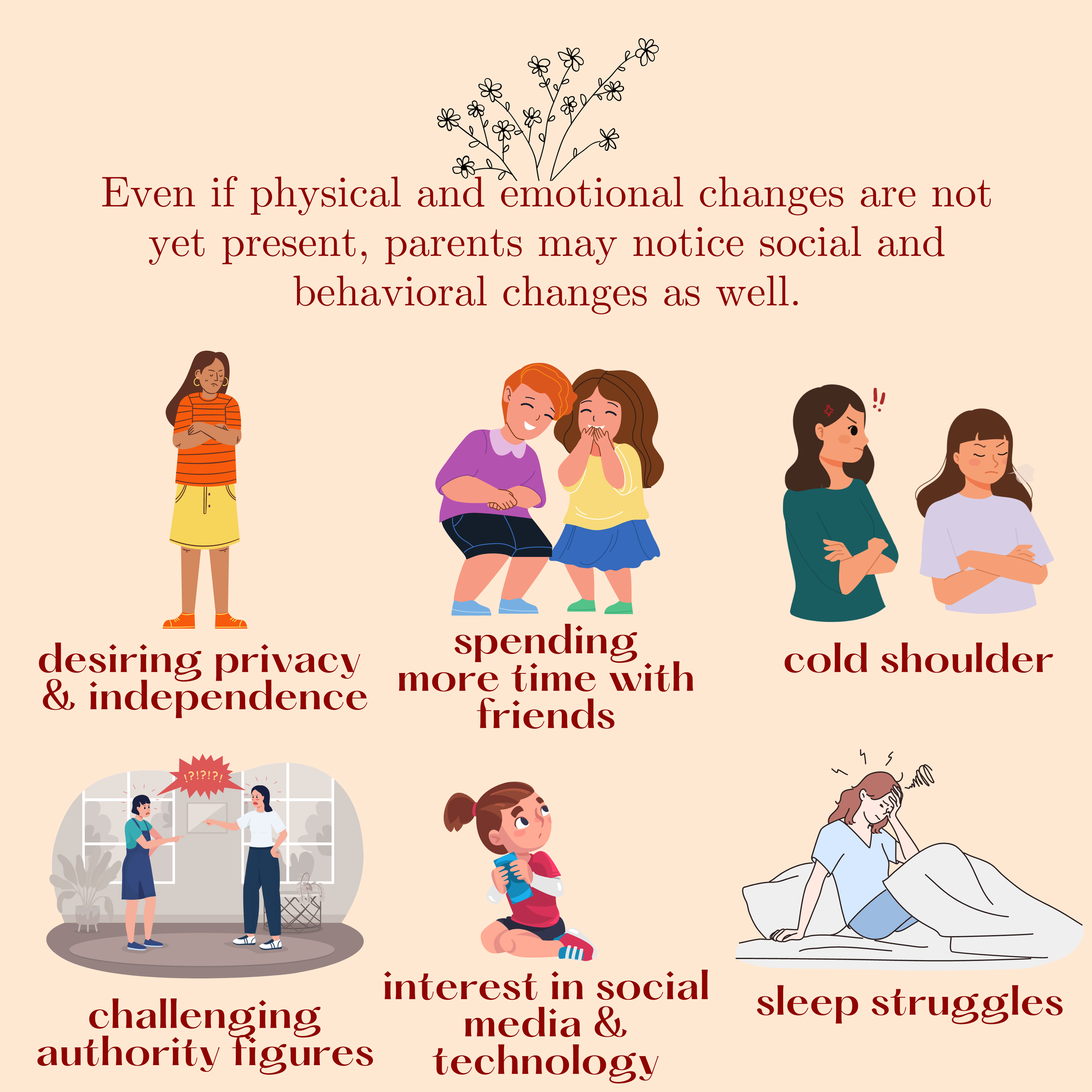
The key here is that it is incredibly important to not take their behaviors personally. The fifth grader’s behavior is not about you. Let’s look at a classic - the cold shoulder. It’s normal as trusted adults to have no clue what we did to deserve this. Where is it coming from? Rather than wondering what WE did wrong, let’s reframe.
The cold shoulder is the psychological equivalent of putting training wheels on a bike. The fifth grader gets to practice leaving their childhood relationship with you behind for several years before they actually have to strike out on their own.
This urge to keep you at a distance is an unconscious one - all they know is that your time together used to be pleasant, but now it is incredibly annoying. Has your youth ever acted out in a way they couldn’t explain? If so, come in close - I’m going to let you in on an important change happening below the surface that will give you the answers you’re looking for.
Another crucial characteristic of the fifth grader is that their brain is beginning to develop for the first time since they were developing in the womb. Their amygdala - the emotional center of the brain - has begun an intense reconstruction, one that will continue until they are in their 20’s. This will cause their behaviors to change and for them to act on emotion alone rather than judgement and reasoning - because their brains are incapable of it. This is why so many youth offer the classic “I don’t know” when you ask them why they acted out in a way that you couldn’t explain. Whether they had an emotional meltdown and then recluse in their room or engage in risky behaviors without caring for the risks, I can promise you that they won’t have a rational explanation for their behavior. At this age, their behavior and decisions are purely emotional. They don’t have the tools to consider risks, use judgement, manage their emotions, or reason with what they are experiencing inside. As trusted adults, that’s where we come in.
So, who is the fifth grader?
The fifth grader is suddenly beginning to seek more independence and privacy. They are beginning to practice parting with their childhood, starting with their relationship to their parents. They are seeking connection elsewhere, usually among their peers at school or at extracurriculars. They may have new interests than they had before, which is all about their journey of self-discovery that will fully launch when they enter sixth grade. They suddenly are allergic to questions, giving the cold shoulder, spending more time with friends and less with family, are challenging authority, are struggling with sleep, and may begin to be interested in social media and technology. They will begin to experience feelings heavier than they had before. They are hypersensitive to trust, beginning to struggle with self-esteem and stress, and are exeriencing heightened emotional states. Their emotions are a rollercoaster that is not in their control, but it is theirs to learn to manage with the help of a trusted adult. They are growing curious about the world around them and their place in it. Their bodies are changing, their brain is changing, and their social lives are changing. This time of their lives is all about change and preparing for it.
It is rare that a youth is actually excited about beginning puberty and not afraid of this next chapter of their life. Some are even resistant to it, which is all the more reason to recognize the importance of normalizing this time of their life and providing them a space of other growing humans to connect with. We must remember and acknowledge that they did not ask for these changes to happen, and oftentimes they can’t explain their own behavior that is only a result of those changes. It can be easy to blame their behavior on them as if it is their fault for changing. But we know that change is messy, it’s hard work, and it is a wonderful opportunity to better understand your youth and build a strong foundation for your relationship together.
What does the fifth grader need?
The fifth grader needs a somewhat structured, predictable home life. They need connection, even when they seem to be rejecting it. They need patience, understanding, and empathy. They need trusted adults both inside AND outside of the home, and they need security and consistency from those trusted adults. The fifth grader needs to be seen and to experience belonging. They need to be heard when they are talking about things they are passionate about, even if you don’t necessarily agree with their perspective (it’s not about what they believe, but the fact that they are passionate about believing in something - within reason). They need extracurriculars that are investing in their journey of self-discovery. They need independence and privacy that is managed in order to maintain their safety and limit risks. They need a lot of communication and a representation of how to manage their emotions from their trusted adults. They need someone to vent to without trying to fix their problems. They need talking, not telling. They need practice building trust. They need reassurance that their body is normal, they are normal, and the changes they are experiencing are normal. They need rupture and repair.
The more important question is - who is your fifth grader, and what do they need?
My advice to you:
Notice, notice, notice. Wouldn’t it be sweet if there was some kind of announcement over the intercom when your youth is beginning to transition from childhood to adulthood? It is so human of us to want to control these transitions, and it is humbling when we cannot. As trusted adults, all we can do is notice what’s going on with the youth in our lives, and go from there.
Don’t take their behavior personally. Again, their behavior is not about you. This is more of a practice than rule, as this is WAY easier said than done. Not taking their behavior personally will require constant practice throughout the upcoming years of their development.
Puberty is like another kind of birth. Think back to when you were preparing for your youth to be born - did you just sit back and say, “I’m just going to see how it goes.” Of course not! You probably read books about pregnancy, took a class, and began learning about how your unborn child is growing and changing. Puberty is a taxing process for you, your youth, and your relationship with one another. I don’t doubt that you may feel a desire to toss your hands into the air in resignation and sink into the cultural expectations surrounding the supposed “impossibility” of adolescence and the teenage years. Support is especially important during this time of your lives together. There is power in asking for help - and that’s why I do what I do.
Your youth’s behavior is not who they are, but how they are. Repeat this one a few times out loud, especially during particularly turbulent times.
Their seemingly irrational behavior is perfectly normal. If your youth is changing, engaging in unexplainable behavior, experiencing heightened emotional states, giving you the silent treatment, or anything else that is suddenly vastly different and seemingly irrational from the rest of their life - this is normal.
The more you know about adolescence and the more prepared you become, the more confidence you will feel in supporting and guiding your youth through it, even in the toughest of times. As I mentioned before, every single fifth grader is different. That’s why I offer 1:1 support to parents to specify support, advice, and tactics for connection. I invite you to book a free 15-minute consultation with me to explore what brought you here, what’s going on with your youth, and what support could look like for you.
What I Offer:
CLASSES FOR YOUTH: I am a certified Body Basics and Beyond Educator for the fifth-grade level. Body Basics Grade 5 provides the information and support youth need to understand the physical and emotional changes associated with puberty. Students connect with one another while sharing their thoughts, feelings, and experiences together, all while in a fun, supportive, and open environment. This type of honest sharing normalizes puberty so youth know that they are not alone as they are growing and changing. Additionally, youth will receive and bring home a Time Together Journal after class. This is an incredible opportunity for parenting adults and youth to talk about the changes associated with puberty using a series of questions and conversation prompts. These activities bring the youth and their parent closer together and supports the youth in feeling comfortable going to their parent for questions and conversations about their body.
1:1 PARENTING SUPPORT: I am available to meet with parents and other trusted adults 1:1 to learn about you and your youth’s needs, the support you’re seeking, and create a plan together that will support you through the most turbulent time of you and your youth’s relationship together. You can learn more about booking with me here.
WORKSHOP REQUESTS: There are SO many topics that parents and youth require support for. That’s why I offer a variety of growing workshops that are available by request. You can learn more about these workshops here. Is there something you’re searching for that isn’t there? Just email me, and I am happy to work with you!